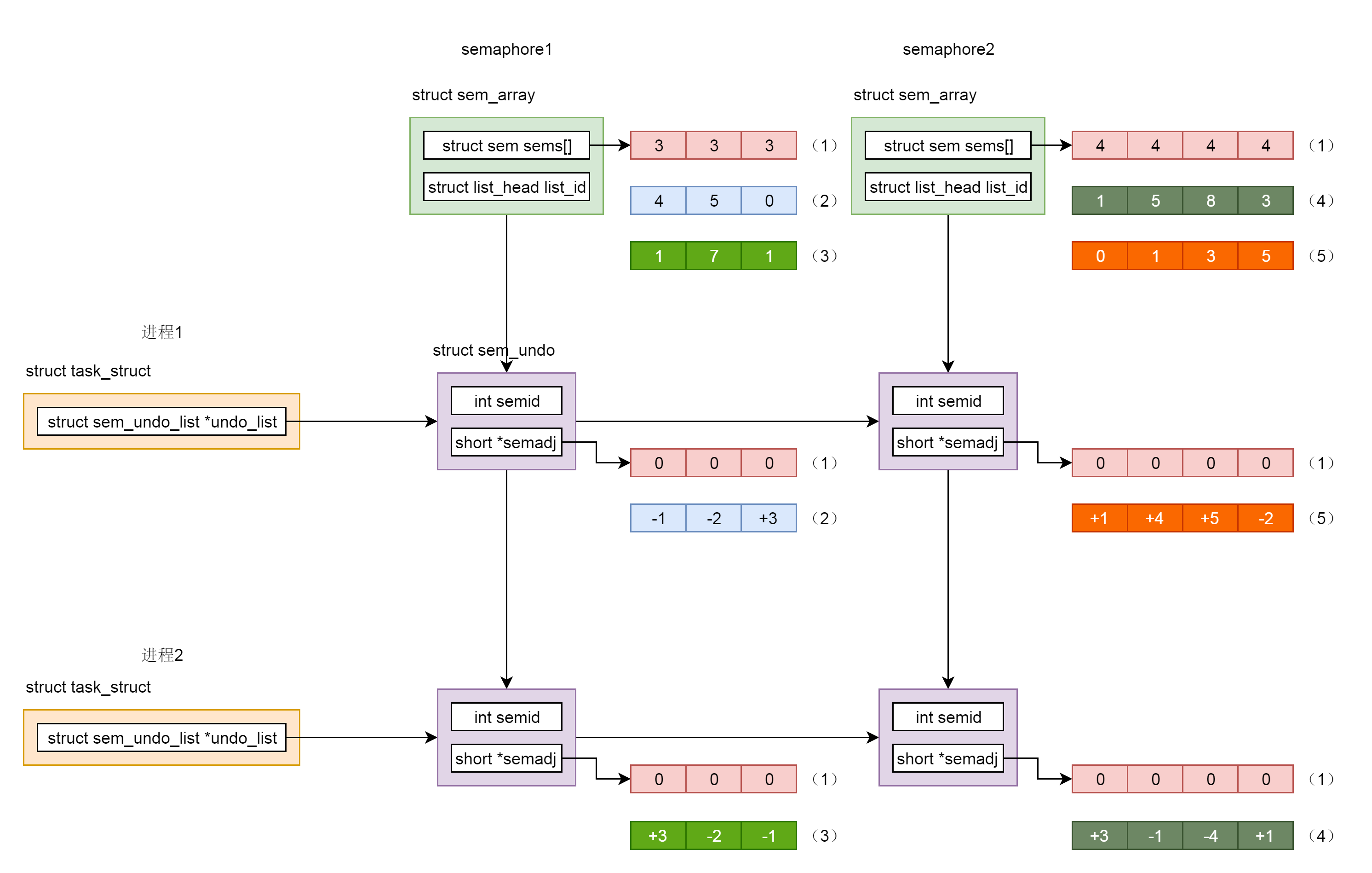
struct sem_array里有多个信号量,放在struct sem sems[]数组里面,在struct sem里面有当前的信号量的数值semval。
1
2
3
4
5
6
7
8
9
10
11
12
13
14
15
16
struct sem {
	int	semval;		/* current value */
	/*
	 * PID of the process that last modified the semaphore. For
	 * Linux, specifically these are:
	 *  - semop
	 *  - semctl, via SETVAL and SETALL.
	 *  - at task exit when performing undo adjustments (see exit_sem).
	 */
	int	sempid;
	spinlock_t	lock;	/* spinlock for fine-grained semtimedop */
	struct list_head pending_alter; /* pending single-sop operations that alter the semaphore */
	struct list_head pending_const; /* pending single-sop operations that do not alter the semaphore*/
	time_t	sem_otime;	/* candidate for sem_otime */
} ____cacheline_aligned_in_smp;
static int semctl_main(struct ipc_namespace *ns, int semid, int semnum,
		int cmd, void __user *p)
{
	struct sem_array *sma;
	struct sem *curr;
	int err, nsems;
	ushort fast_sem_io[SEMMSL_FAST];
	ushort *sem_io = fast_sem_io;
	DEFINE_WAKE_Q(wake_q);
	sma = sem_obtain_object_check(ns, semid);
	nsems = sma->sem_nsems;
......
	switch (cmd) {
......
	case SETALL:
	{
		int i;
		struct sem_undo *un;
......
		if (copy_from_user(sem_io, p, nsems*sizeof(ushort))) {
......
		}
......
		for (i = 0; i < nsems; i++) {
			sma->sems[i].semval = sem_io[i];
			sma->sems[i].sempid = task_tgid_vnr(current);
		}
......
		sma->sem_ctime = get_seconds();
		/* maybe some queued-up processes were waiting for this */
		do_smart_update(sma, NULL, 0, 0, &wake_q);
		err = 0;
		goto out_unlock;
	}
	}
......
    wake_up_q(&wake_q);
......
}
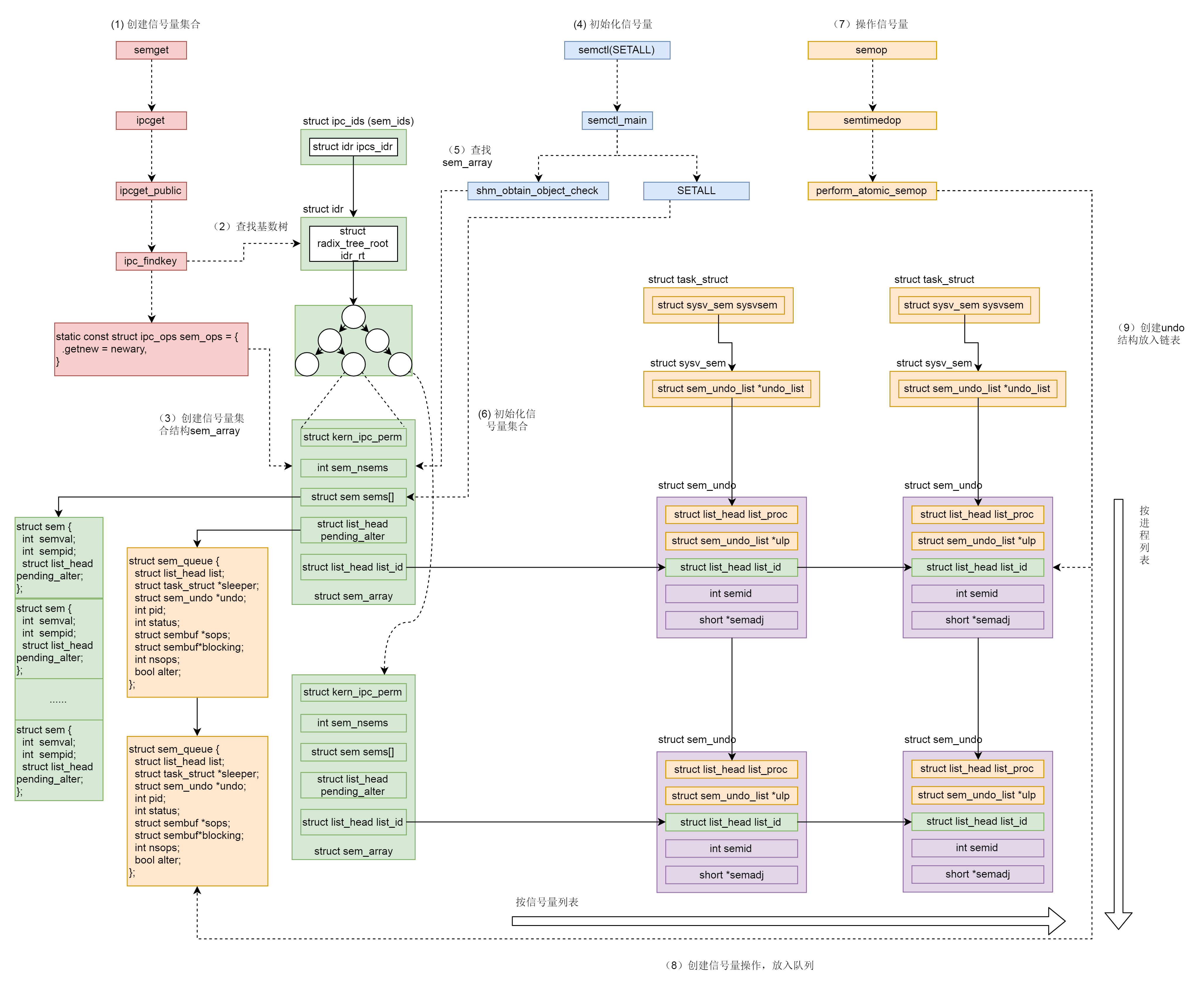
在semctl_main函数中,先是通过sem_obtain_object_check,根据信号量集合的id在基数树里面找到struct sem_array对象,发现如果是SETALL操作,就将用户的参数中的unsigned short *array通过copy_from_user拷贝到内核里面的sem_io数组,然后是一个循环,对于信号量集合里面的每一个信号量,设置semval,以及修改这个信号量值的pid。
if (timeout) { struct timespec _timeout; if (copy_from_user(&_timeout, timeout, sizeof(*timeout))) { } jiffies_left = timespec_to_jiffies(&_timeout); } ...... /* On success, find_alloc_undo takes the rcu_read_lock */ un = find_alloc_undo(ns, semid); ...... sma = sem_obtain_object_check(ns, semid); ...... queue.sops = sops; queue.nsops = nsops; queue.undo = un; queue.pid = task_tgid_vnr(current); queue.alter = alter; queue.dupsop = dupsop;
error = perform_atomic_semop(sma, &queue); if (error == 0) { /* non-blocking succesfull path */ DEFINE_WAKE_Q(wake_q); ...... do_smart_update(sma, sops, nsops, 1, &wake_q); ...... wake_up_q(&wake_q); goto out_free; } /* * We need to sleep on this operation, so we put the current * task into the pending queue and go to sleep. */ if (nsops == 1) { struct sem *curr; curr = &sma->sems[sops->sem_num]; ...... list_add_tail(&queue.list, &curr->pending_alter); ...... } else { ...... list_add_tail(&queue.list, &sma->pending_alter); ...... }
do { queue.status = -EINTR; queue.sleeper = current;
__set_current_state(TASK_INTERRUPTIBLE); if (timeout) jiffies_left = schedule_timeout(jiffies_left); else schedule(); ...... /* * If an interrupt occurred we have to clean up the queue. */ if (timeout && jiffies_left == 0) error = -EAGAIN; } while (error == -EINTR && !signal_pending(current)); /* spurious */ ...... }
struct sem_queue {
	struct list_head	list;	 /* queue of pending operations */
	struct task_struct	*sleeper; /* this process */
	struct sem_undo		*undo;	 /* undo structure */
	int			pid;	 /* process id of requesting process */
	int			status;	 /* completion status of operation */
	struct sembuf		*sops;	 /* array of pending operations */
	struct sembuf		*blocking; /* the operation that blocked */
	int			nsops;	 /* number of operations */
	bool			alter;	 /* does *sops alter the array? */
	bool                    dupsop;	 /* sops on more than one sem_num */
};
struct sem_undo { struct list_head list_proc; /* per-process list: * * all undos from one process * rcu protected */ struct rcu_head rcu; /* rcu struct for sem_undo */ struct sem_undo_list *ulp; /* back ptr to sem_undo_list */ struct list_head list_id; /* per semaphore array list: * all undos for one array */ int semid; /* semaphore set identifier */ short *semadj; /* array of adjustments */ /* one per semaphore */ };